

Zbigniew Swiatkowski
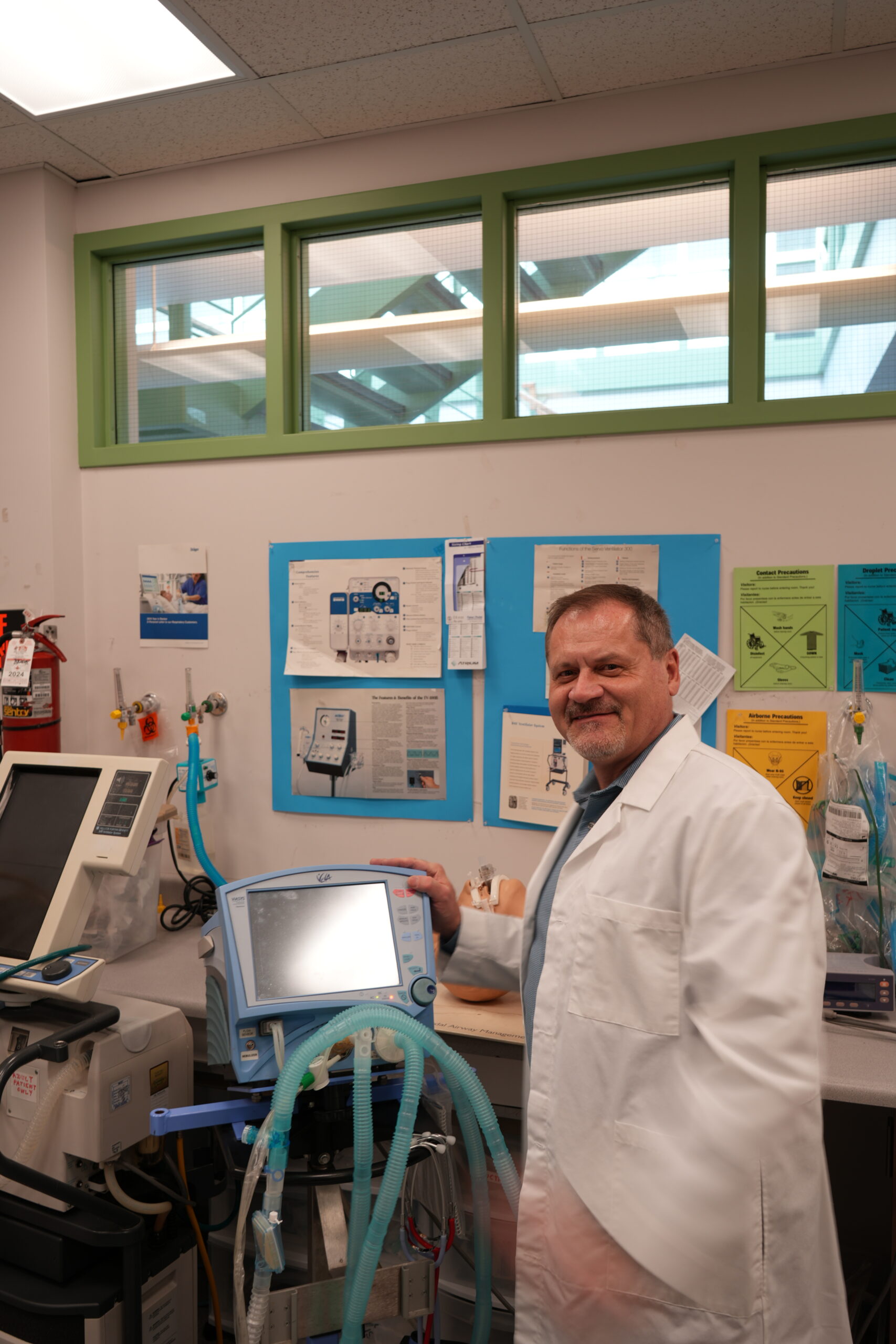
Zbigniew 'Ziggy" Swiatkowski is the Program Director for the Respiratory Therapy Program in St. Augustine College at Lewis University.…
Read More
Start your studies in Spanish and finish in English

80 credit hours
Associate of Applied Science
In Person
Our Associate of Applied Sciences (AAS) degree is a health program in Respiratory Therapy is designed to train you in the growing field of respiratory care. As a student in this (80 credit hours) program, you will receive the training needed to work as a respiratory therapist in hospitals, home care, pulmonary clinics, and other healthcare environments. St. Augustine’s Respiratory Therapy Associate’s degree prepares graduates for a medical career as a respiratory therapist. Our classes are designed for recent high school graduates and working students.
Accredited Respiratory Therapy Program – What You’ll Learn
The Respiratory Therapy AAS program prepares students to perform the specialized diagnostic and therapeutic procedures used in clinical respiratory care, including:
Students also complete supervised clinical rotations with progressive responsibility across six semesters, using the Trajecsys online clinical management system for tracking, reporting, and grading. Respiratory Therapy Program Details
The program comprises six (6) semesters of coursework. Graduates are eligible to take the National Board for Respiratory Care (www.nbrc.org) Therapist Multiple Choice Exam. Candidates with a minimum score of 86 will receive a Certified Respiratory Therapist (CRT)credential, and candidates who score 92 or higher are eligible to sit for the NBRC Clinical Simulation Examination and, upon successful passing, receive a Registered Respiratory Therapist credential.
This is a unique therapy program, with a structure that differs somewhat from the rest of the curricula St. Augustine College offers; for example, the clinical segment of the health program (4th semester and up) includes courses that meet only at specific times and have durations different from the standard 8-week terms. Always ask the Respiratory Therapy Learning Facilitator or other departmental staff for the most accurate, updated information.
*Please keep in mind that this program is 60-70% in-person.
For more information related to the profession, please visit the American Association for Respiratory Care webpage at www.aarc.org.
The Entry into Respiratory Care Professional Practice Program, CoARC number 200587, AAS Degree, St. Augustine College in Chicago Illinois is accredited by the Commission on Accreditation for Respiratory Care (www.coarc.com)
CoARC is the only accrediting body recognized for respiratory therapy education programs in the United States. Choosing a CoARC-accredited respiratory therapy program means:
Program ID# 200587 (www.coarc.com)
CoARC accredits respiratory therapy education programs across the United States through an outcomes-based process. This approach evaluates program effectiveness using performance indicators that measure the achievement of educational goals.
Program Outcomes Data: https://coarc.com/students/programmatic-outcomes-data/
Graduates of the program are eligible to take the NBRC examinations to become a Certified Respiratory Therapist (CRT). They may also sit for the Clinical Simulation Exam and, upon passing, earn the title of Registered Respiratory Therapist (RRT).
In addition to the General Admission Requirements, applicants interested in this Associate’s in Respiratory Therapy in the Chicago area must meet the following criteria:
Cumulative Grade Point Average (GPA): A (GPA) of 2.50 in the following prerequisite courses, which can be taken at Lewis University:
Mandatory Criminal Background Check: Students who may have concerns regarding the required background check are encouraged to speak with program faculty in the Respiratory Therapy Department before applying for admission. In compliance with standards set forth by the Joint Commission on the Accreditation of Health Care Organizations (JCAHCO), and the Health Care Worker Background Check Act, an Illinois state law, individuals providing health care at hospital/clinical settings must submit a certified fingerprint background check.
This policy also applies to respiratory therapy students receiving clinical training in affiliated clinical facilities; therefore, prospective respiratory therapy students must be aware of this requirement before registering for either pre-respiratory courses or Respiratory courses. A prospective respiratory therapy student must be aware that any prior felony or misdemeanor conviction may impact the student’s ability to participate in clinical courses. This college is required to submit the students’ background check results prior to admission to any clinical course rotation.
Is respiratory therapy a good career? What does a respiratory therapist do? If you still have questions about just what a respiratory therapist does on a day-to-day basis, and you’re still curious about what a promising career our associate of applied science degree can do for you and your future read here.
The respiratory therapy field offers job stability through a nationwide demand for more professionals, with a 12% projected increase in job openings from 2024 to 2034. According to the Bureau of Labor Statistics, the median salary for respiratory therapists is $80,450 in the United States, and those who graduate from the associate’s degree program earn an average starting salary between $70,000 and $80,000.
100% Graduate Employment
St. Augustine College Respiratory Therapy graduates are employed immediately upon graduation. Many employers in the Chicago metropolitan area offer sign-on bonuses, education reimbursements, and relocation assistance to attract new graduates from our program.
According to current compensation data from ZipRecruiter, Indeed, and Salary.com:
The RRT (Registered Respiratory Therapist) credential, available to St. Augustine graduates to pursue, commands higher compensation and is the preferred credential among most Chicago-area hospital employers.
Job Outlook
Respiratory Educator
Students who complete the AAS in Respiratory Therapy sometimes choose to continue their clinical education with a bachelor’s degree in nursing.
For those interested in expanding their scope of practice within Chicago’s healthcare system, St. Augustine’s accelerated BSN programs in Chicago offer a path forward, with the same commitment to flexible scheduling and bilingual support that defines every program at SAC.
And more. With a degree in Respiratory Therapy from St. Augustine College at Lewis University, you’ll be well-prepared to join a dedicated workforce of healthcare professionals.
To adhere to an “outcomes-based” process mandated by the Commission on Accreditation for Respiratory Care and high competency examination standards set by the National Board for Respiratory Care (NBRC), graduates of our AAS in Respiratory Therapy degree program*, will be prepared to demonstrate the following Cognitive, Psychomotor, and Affective skills: *The general education core for this degree complies with the guidelines of the Illinois Articulation Initiative (IAI).



Comprehend, apply, evaluate, and recommend didactic, laboratory, and clinical information relevant to your role as a respiratory therapist—integrating your general education skills within the lessons you have learned from the Respiratory Therapy program.
Effectively and efficiently perform the diagnostic and therapeutic procedures required to fulfill your role, as learned from our Respiratory Therapy program, in hospitals, home care, and other medical care environments.
Demonstrate ethical communication and professional behavior consistent with employer expectations.
Meet our dedicated Respiratory Therapy faculty members below.