

From Classroom to Clinic: How Respiratory Therapy Students Learn to Care for Patients

Learning the Core Skills of a Respiratory Therapist
In the lab, students learn to deliver oxygen therapy, manage ventilators, and interpret diagnostic tests that help physicians make critical decisions. These respiratory therapist skills go far beyond the classroom—they’re the foundation of compassionate, effective care.
Respiratory therapists play a crucial role in managing mechanically ventilated patients and must be able to troubleshoot patient-ventilator asynchronies to help prevent ventilator-induced lung injury. You’ll also gain experience in areas like airway management, arterial blood gas analysis, and patient education, skills that open the door to many respiratory care jobs in hospitals, clinics, and home-care settings.
Our instructors bring years of real-world experience into every lesson, ensuring you learn both the “how” and the “why” behind each procedure. That blend of theory and practice helps students understand the true impact of their work: helping people breathe easier and live better.
Hands-On Training That Builds Confidence
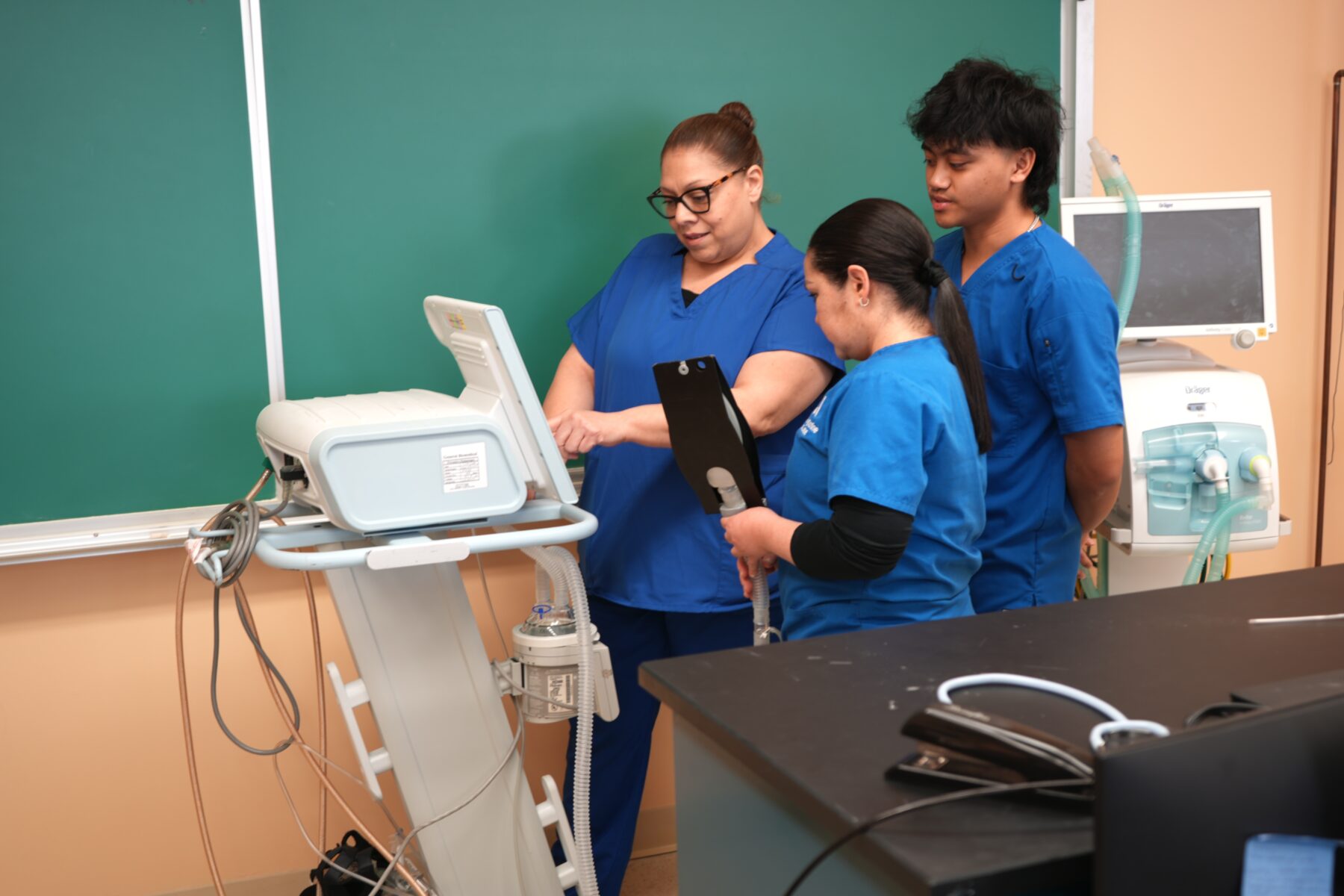
Photos from our respiratory therapy lab tell the story best: students collaborating on equipment checks, practicing ventilator management, and learning how to respond in emergencies. Because initiating and maintaining ventilation is complex and requires demonstrated competency, our lab experiences give students a head-start. These moments of hands-on learning build the confidence every future therapist needs before entering the field.
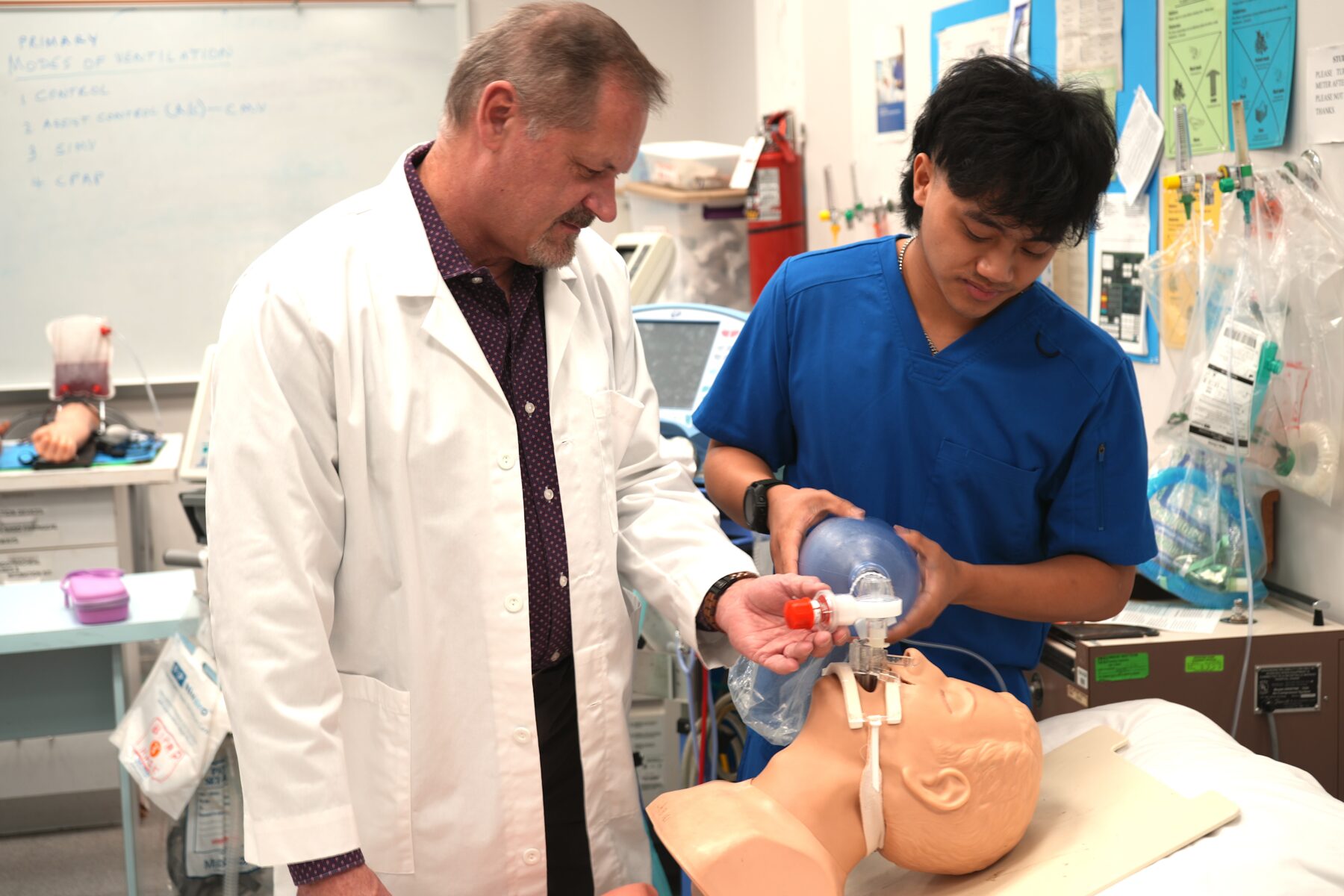
Students begin by mastering oxygen-delivery devices (such as nasal cannulas, simple masks, and Venturi masks). In the lab, they adjust flow rates, test mask fits, and calculate estimated FiO2 values, learning how to tailor supplemental oxygen to patient needs. They work with mechanical ventilator simulations using test lungs or lung simulators by connecting ventilator circuits, setting modes (volume control vs pressure control), altering parameters, and observing the effect on lung function. In airway management labs, students practice suctioning, tracheostomy care, and airway clearance techniques on mannequins or simulators. They also train on pulmonary function and diagnostic test equipment, such as spirometers and drafting up patient assessment and care plans.
As part of your education, you’ll complete clinical rotations where you apply these skills with real patients under professional supervision. It’s the perfect bridge between classroom learning and clinical expertise, giving you the experience that employers value most.
Meeting the Growing Need for Respiratory Therapists
The healthcare field continues to see a rising need for respiratory therapists. According to the U.S. Bureau of Labor Statistics, employment of respiratory therapists is projected to grow 12% from 2024 to 2034, much faster than the average for all occupations. This demand creates strong job security and advancement opportunities for graduates who complete the right training.
Schooling and Requirement for a Rewarding Career
If you’re wondering about schooling for respiratory therapists or the education requirements for respiratory therapist roles, St. Augustine College provides a clear, supportive path. Our Associate of Applied Science in Respiratory Therapy gives you everything you need to meet respiratory therapist requirements and prepares you to earn professional credentials like the Certified Respiratory Therapist (CRT) and Registered Respiratory Therapist (RRT)
From small class sizes to personalized instruction, our program makes becoming a respiratory therapist achievable, even for students balancing work and family.
Ready to Start Your Journey?
If you’re searching for respiratory therapist classes near me or want to learn how to become a respiratory care practitioner, St. Augustine College can help you take the next step. Here, you’ll gain the technical knowledge, clinical experience, and confidence to begin a meaningful career helping others breathe easier.
Take the first step toward your future in respiratory care.
Explore the Associate in Respiratory Therapy program and dcover how you can move from classroom to clinic, and into a career that changes lives.